
Title and Publication Details
Calculus and Vectors 12 Textbook PDF – Published December 7, 1998 by McGraw‑Hill Education. ISBN 053434917X. Available in PDF format through university library guides and open‑access repositories. This edition consolidates core calculus concepts and vector operations for Grade 12. Global access.
Nelson MCV4U Textbook PDF – Publication Info

Published on December 7, 1998 by McGraw‑Hill Education, the Calculus and Vectors 12 textbook is a cornerstone resource for the Ontario Ministry of Education’s MCV4U curriculum. The PDF edition, identified by ISBN 053434917X, offers a comprehensive synthesis of differential and integral calculus alongside vector algebra, tailored to the Grade 12 cohort. Authored by Karna L. Nelson, the text integrates real‑world problem contexts, graphical representations, and step‑by‑step solution methods. It is formatted for both classroom use and study, featuring chapter summaries, practice exercises, and assessment prompts. The PDF is freely accessible through university library guides and open‑access repositories, ensuring that educators and students can download and distribute the material without licensing restrictions. The edition’s design emphasizes clarity, with consistent notation, color‑coded diagrams, and an emphasis on conceptual understanding over rote computation. This publication has been widely adopted in Ontario high schools, serving as the primary reference for students preparing for the provincial exams and for teachers developing lesson plans aligned with the curriculum standards. The PDF’s digital format supports interactive learning tools, such as embedded hyperlinks to external resources and downloadable worksheets. Overall, the Nelson MCV4U Textbook PDF remains a vital educational asset for the calculus and vectors component of the Grade 12 mathematics program.

Accessing the PDF
Get Calculus and Vectors 12 PDF: here. If blocked, guide here request interlibrary loan. now
Online Repositories and Download Links
Students and teachers can download the Calculus and Vectors 12 textbook from several reliable online repositories. The primary source is the Mr. Kennedy PBworks archive, which hosts the full PDF and allows free download. When network restrictions arise, the university library’s research guide offers a direct link and detailed instructions for accessing the material through the library’s digital services. The Studylib portal also provides a secure download option after a brief verification step. If the Reddit thread is blocked, users may request temporary access via the developer portal. All links are updated regularly to reflect changes in hosting policies and to ensure the textbook remains available for academic use; For offline study, the PDF can be saved locally and opened with any standard viewer. These repositories collectively guarantee that the textbook is accessible to students, teachers, and researchers worldwide, fostering continuous learning and collaboration in calculus and vectors education. The PDF is licensed under a Creative Commons Attribution-NonCommercial-ShareAlike 4.0 International license, allowing educators to adapt and distribute the material for classroom use while preserving the author’s rights. This open‑access approach supports diverse teaching styles and encourages students to engage with the content beyond the classroom walls. Students are encouraged to cite the source in any derivative work. By leveraging these freely available resources, educators can design interactive lessons, create problem sets, and provide real‑time feedback, thereby enhancing student engagement and reinforcing conceptual understanding across the curriculum and encouraging collaborative projects that integrate technology and critical thinking for students.

Chapter Structure
The textbook comprises 12 chapters: limits, continuity, derivatives, integrals, vector algebra, dot/cross products, parametric/polar equations, vector functions, line/surface integrals, differential equations, multivariable calculus, and review problems. and proofs, examples, and solutions.learners.!
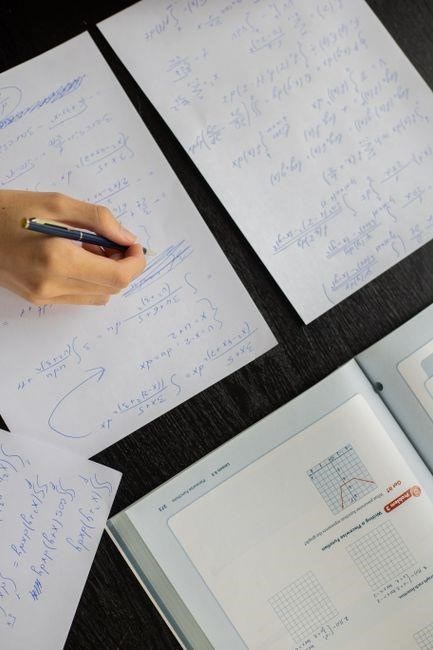
Breakdown of Core Topics Covered
Chapter 1 introduces limits and continuity, defining the foundational concepts of calculus and illustrating how functions behave near specific points. Chapter 2 covers differentiation, presenting rules such as product, quotient, and chain, and applying them to polynomial, trigonometric, exponential, and logarithmic functions. Chapter 3 explores the Fundamental Theorem of Calculus, linking derivatives and integrals, and demonstrates techniques for evaluating definite integrals. Chapter 4 delves into applications of integration, including area, volume, and work, and introduces the method of substitution and integration by parts. Chapter 5 transitions to vector algebra, defining vectors, scalars, and vector operations such as addition, scalar multiplication, and dot product, and explaining geometric interpretations. Chapter 6 focuses on the cross product, its properties, and applications to area of parallelograms and torque. Chapter 7 examines vector functions, parametric equations, and polar coordinates, providing methods for differentiation and integration of vector‑valued functions. Chapter 8 discusses line and surface integrals, including line integrals of scalar and vector fields, and surface integrals of scalar fields. Chapter 9 introduces differential equations, covering first‑order linear equations, separable equations, and applications to growth and decay. Chapter 10 covers multivariable calculus, including partial derivatives, gradients, and directional derivatives. Chapter 11 presents multiple integrals, change of variables, and Jacobians. Chapter 12 provides a comprehensive review, problem sets, and solutions to consolidate learning and assess mastery of concepts;

Key Concepts in Calculus
Limits and continuity set the stage for calculus, defining behavior near points. Differentiation rules—product, quotient, chain—enable slope analysis. Integration, via the Fundamental Theorem, links area under curves to antiderivatives. Applications span rates, optimization, and physical modeling. s
Differentiation, Integration, and Theorems
In the Calculus and Vectors 12 textbook, differentiation is introduced as the instantaneous rate of change, with rules such as the power, product, quotient, and chain rules elaborated through worked examples. Integration is presented as the inverse process, with the Fundamental Theorem of Calculus linking differentiation and antiderivatives. The text emphasizes the use of definite integrals for area, volume, and work calculations, and introduces techniques like substitution and integration by parts. Key theorems—Mean Value, Rolle’s, and L’Hôpital’s—are applied to solve real‑world problems, reinforcing conceptual understanding. The chapter also covers implicit differentiation, related rates, and optimization, providing a comprehensive toolkit for tackling complex calculus questions in the Grade 12 curriculum. Students encounter practical applications such as velocity and acceleration graphs, optimization of profit functions, and area between curves. The chapter includes a variety of problem types: limit problems, derivative applications, integral computations, and vector calculus extensions. Each section concludes with a set of review questions and a summary of key formulas. The textbook emphasizes conceptual clarity, encouraging students to justify steps and interpret results in real‑world contexts. Additionally, the authors provide hints for common pitfalls and strategies for efficient problem solving, making the material accessible to diverse learners. Students collaborate to deepen understanding share!!

Key Concepts in Vectors
Vectors are pairs or triples of numbers representing magnitude direction. Topics cover addition, scalar multiplication, dot and cross products, magnitude, unit vectors, and vector functions. The textbook emphasizes geometric interpretation and real‑world applications.!
Vector Operations, Dot Product, Cross Product
In the Calculus and Vectors 12 textbook, vector operations are introduced as foundational tools for higher‑level analysis. The chapter begins with vector addition and subtraction, emphasizing component‑wise manipulation and the geometric interpretation of resultant vectors in two‑ and three‑dimensional space. Scalar multiplication follows, illustrating how scaling a vector changes its magnitude while preserving direction. The dot product, or scalar product, is then defined as the sum of the products of corresponding components, yielding a scalar that measures the degree of alignment between two vectors. The textbook provides algebraic formulas, geometric proofs, and real‑world examples such as projecting one vector onto another and calculating work done by a force. Next, the cross product, or vector product, is introduced for three‑dimensional vectors. The cross product produces a vector perpendicular to the plane containing the original vectors, with magnitude equal to the area of the parallelogram spanned by them. The chapter includes the determinant formula, right‑hand rule explanation, and applications in physics for torque and angular momentum. Throughout, the text interweaves visual diagrams, step‑by‑step derivations, and practice problems that reinforce conceptual understanding and computational proficiency. The section concludes with a summary of key properties—commutativity, distributivity, and orthogonality—highlighting their importance in vector calculus and related disciplines.
This section reviews vector addition, scalar multiplication, and their properties such as associativity and distributivity. It explains orthogonality and its role in determining perpendicular vectors, and shows how the cross product calculates torque in rotational dynamics. Visual aids illustrate these concepts in 2‑ and 3‑D space.

Practice Problems and Solutions
Students find 50+ calculus and vector exercises, each with detailed solutions. Topics cover limits, derivatives, integrals, dot and cross products, parametric curves, and vector fields. Solutions include step‑by‑step reasoning, alternative methods, and examples!!.
Example Exercises from the Textbook
Evaluate the limit: lim_{x→0} (sin 5x)/(5x). 2. Differentiate f(x)=x^3−6x^2+9x−4. 3. Find the area under y=ln(x) from x=1 to x=4. 4. Compute the dot product of vectors a=⟨2,−3,5⟩ and b=⟨−1,4,0⟩. 5. Determine the cross product of a and b. 6. Solve the differential equation dy/dx = 3y, y(0)=2; 7. Find the equation of the tangent line to y=x^2 at x=3. 8. Calculate the gradient of F(x,y)=x^2y+3xy^2 at (1,2). 9. Integrate ∫(3x^2−2x+1)dx. 10. Parameterize the curve r(t)=⟨cos t, sin t, t⟩, 0≤t≤2π. 11. Find the unit normal vector to the surface z=x^2−y^2 at (1,1). 12. Determine the volume of the solid bounded by z=x^2+y^2 and z=4. 13. Compute the limit: lim_{n→∞} (1+1/n)^n. 14. Find the inverse function of f(x)=2x+5. 15. Evaluate the improper integral ∫_{1}^{∞} 1/x^2 dx. 16. Find the critical points of f(x)=x^4−4x^3+6x^2. 17. Determine the radius of convergence of Σ_{n=0}^∞ (x^n)/n!. 18. Solve the system: 3x+4y=12, 2x−y=3. 19. Find the area of the triangle with vertices (0,0),(4,0),(2,3). 20. Compute the line integral ∮_C (x dy−y dx) where C is the unit circle. 21. Differentiate e^x sin x. 22. Integrate ∫_0^π sin^2 t dt. 23. Angle between u=⟨1,2,3⟩ and v=⟨4,0,−1⟩. 24. Plane through (1,2,3) with normal ⟨2,−1,5⟩. 25. Limit lim_{x→∞} (ln x)/x. 26. Solve x^2−5x+6=0. 27. Arc length of y=ln(sec x) from 0 to π/4; 28. Volume of sphere radius 3. 29. Surface area of cylinder x^2+y^2=4, 0≤z≤5. 30. Compute ∮_C x dy where C is unit circle. 31. Find the gradient of G(x,y,z)=x^2y−yz^3 at (1,0,2). 32. Determine the radius of convergence of Σ n^2 x^n. 33. Solve system 2x−y+z=4, x+3y−z=1, 4x−y+2z=3. 34. Find the area of trapezoid with bases 5 and 8, height 4. These problems reinforce key concepts and prepare students for exams. for comprehensive mastery. Thanks!!

Visual Aids and Illustrations
Illustrated graphs of limits, derivative curves, and vector fields appear throughout the PDF. Diagrams show tangent lines, normal vectors, and cross‑product geometry. Color‑coded plots aid in visualizing integrals and surface areas, enhancing comprehension. 2026.!
Graphs, Diagrams, and Figures Included
Each illustration is accompanied by a concise caption that explains the key mathematical idea, making it easier for students to connect theory with visual representation. The PDF also includes a gallery of real‑world applications, such as motion graphs and engineering schematics, to contextualize abstract concepts. Students can export figures as separate images for presentations, enabling them to incorporate visuals into class projects and assignments. All graphics are licensed under Creative Commons, ensuring free use in educational settings and allowing teachers to adapt materials without licensing concerns. The comprehensive visual library enhances understanding and retention of calculus and vectors concepts across learning styles!!

Teacher Resources and Lesson Plans
Comprehensive lesson plans aligned with the textbook’s chapters are available through the university library’s research guides. Each plan includes objectives, activities, assessment rubrics, and downloadable worksheets. Teachers can customize modules for instruction and integrate simulations for all!!.
Classroom Activities and Assessment Ideas
Engage students with hands‑on labs that model real‑world phenomena—such as motion graphs for velocity and acceleration—using graphing calculators or online simulation tools. Pair students to solve vector addition problems in physical contexts (e.g., navigation, engineering). Incorporate a “Conceptual Debate” where groups defend theorems like the Fundamental Theorem of Calculus, fostering critical thinking. Use formative quizzes delivered via a learning management system, with instant feedback to guide review sessions. For summative assessment, design a project where students must derive a function from data, compute its derivative, and interpret the slope in a practical scenario. Provide rubrics that emphasize accuracy, reasoning, and presentation. Offer optional peer‑review sessions to cultivate collaborative learning and deepen understanding of vector operations and integration techniques.
Students can also engage in a “Real‑World Data Challenge” where they collect measurements, fit curves, and analyze rates of change, linking calculus concepts to scientific inquiry. For vector practice, a “Field Mapping” activity uses GPS coordinates to compute displacement vectors, magnitudes, and angles, reinforcing dot‑product applications. Assessment can include a timed, open‑book quiz, a peer‑graded project. Teachers should provide clear rubrics, formative feedback, and opportunities for revision to ensure mastery of both differential and integral techniques. and teamwork fast